Charging
Stay powered for your drive.


Stay powered for your drive.
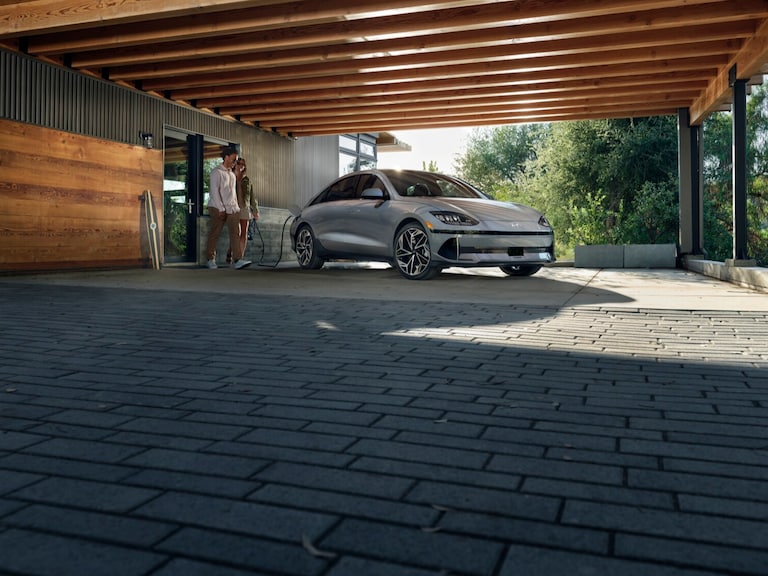
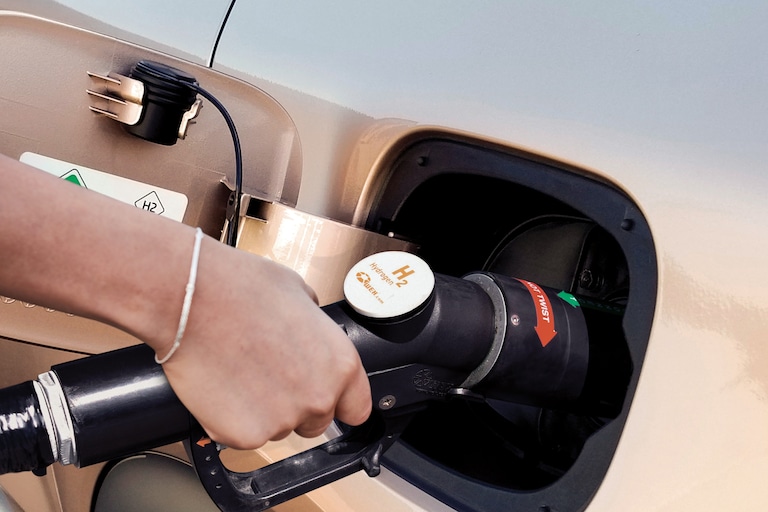
With electrified vehicles, you no longer have to rely on gas as your only source of power. In fact, our electric and fuel cell models do not use fossil fuel at all. This transition often brings up two of the most important questions for shoppers in Jefferson Parish: "How do I keep my vehicle charged?" and "How does it fit into my daily life?" We are here to help you navigate those answers while exploring the benefits of the new Hyundai electrified lineup.
Whether you are considering a hybrid for your commute from Kenner or a fully electric IONIQ 5 for driving around the city, charging is simpler than most people expect. Most residents find that a home charging setup handles their needs perfectly, while a growing network of stations makes trips to Marrero or Laplace convenient. Beyond the fuel savings, these vehicles require unique care, and our certified service team is trained specifically to maintain high-voltage systems. Plus, when you choose a new EV or hybrid from the #1 Hyundai Metro New Orleans Dealer, you still get the protection of the Matt Bowers Lifetime Warranty at no extra cost.
How long does it take to charge a Hyundai EV?
Charging times vary by model, but using a Level 3 fast charger can often take a battery from 10% to 80% in under 20 minutes for many of our newer models.
Do I need a special charger at home?
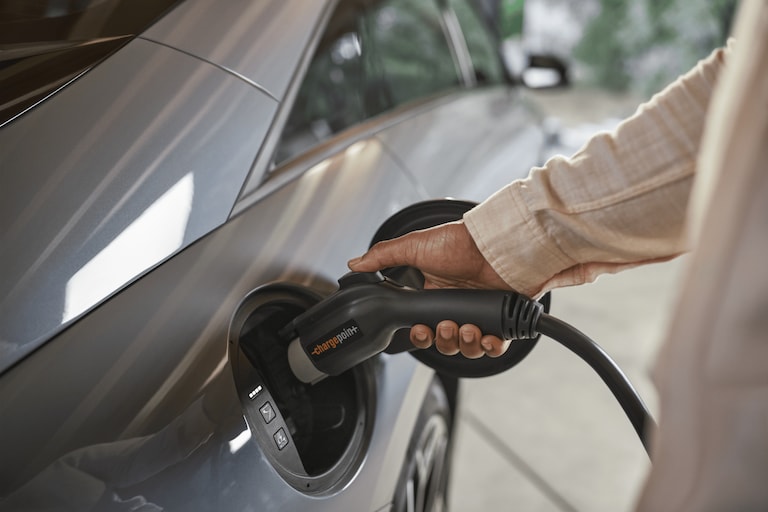
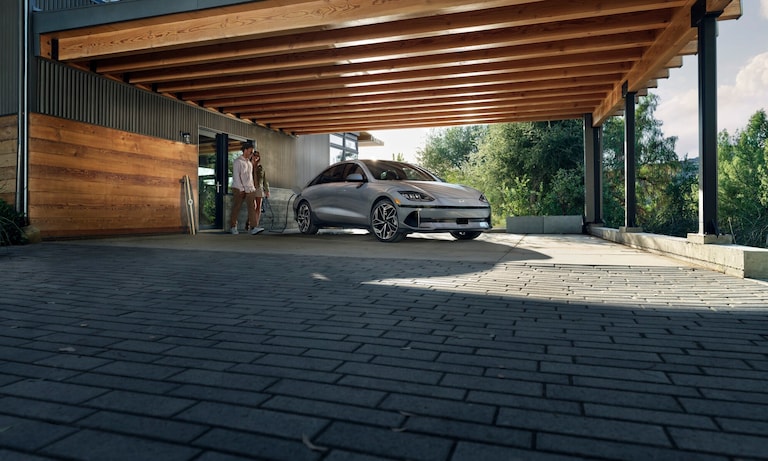
While you can use a standard outlet, most drivers in the metro area prefer a Level 2 home charger for faster, more efficient overnight charging.
Is the battery covered by a warranty?
Yes, Hyundai provides an extensive battery warranty, and select models at our dealership are further protected by our exclusive Lifetime Warranty.

As with gas vehicles, EVs are also affected by extreme temperatures. Both cold and very hot weather impact the battery's performance, reducing range. Low temperatures also cause the tire pressure to drop, which means more rolling resistance.

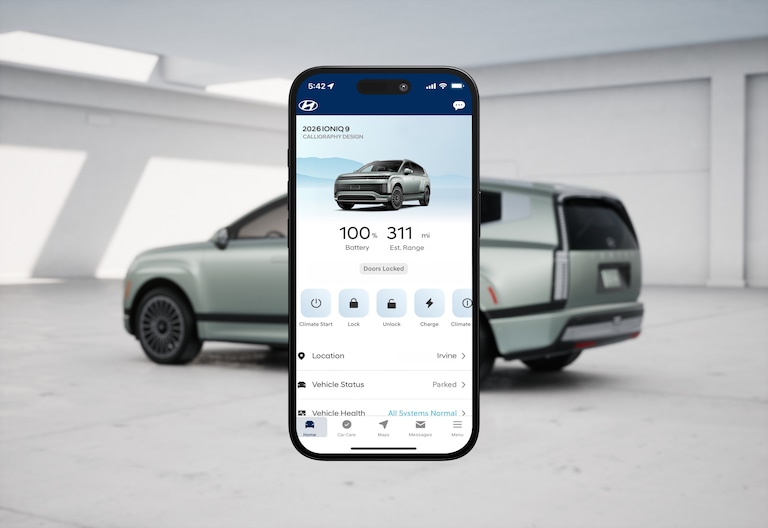
Running the A/C, heater, or using the heated seats can drain the battery. To conserve energy, pre-heat or pre-cool your EV while plugged in, which can be done remotely with the Hyundai Bluelink app.

Aggressive driving such as quick acceleration and hard braking uses up more battery power. To maximize your range, try gradually increasing your speed and anticipating stops to slow down smoothly.

If you want to maximize range, moderate speeds are key. Higher speeds mean more wind resistance, which requires more power to compensate. This causes the motor(s) to heat up and become less efficient. Plus, the battery doesn't get as much charge back from regenerative braking.

If your route goes through a hilly or mountainous area, your current range will drop faster than normal since driving uphill consumes more energy than traveling on level ground.

An electric vehicle's driving range is also impacted in a number of other ways, including the weight it's carrying, the tire pressure, and battery condition.

Set to higher levels of regenerative braking, you get more energy capture when decelerating. On IONIQ 5, IONIQ 6, and KONA Electric you can use the i-Pedal function which activates the brakes when you take your foot off the accelerator, slowing to a complete stop.

When you set to the lower levels of regenerative braking, you capture less energy but get longer, smoother coasting when you take your foot off the accelerator pedal.

Activate the Smart Regeneration System, and it automatically adjusts the regenerative braking level according to the speed and distance of the vehicle in front of you.
Making the switch from a gas to an electrified vehicle is a big decision. One great reason to go electric is lower overall energy costs. To make it easier to compare electric with gas models, the EPA created MPGe which stands for "miles per gallon of gasoline-equivalent."
Simply put, MPGe is the distance an EV can travel on 33.7 kWh of electricity, which is the energy equivalent of one gallon of gas.
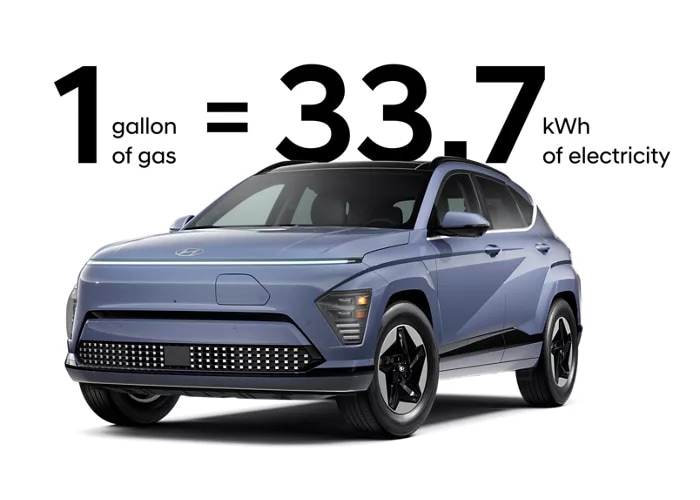
2025 KONA Electric SE: 118 MPGe (EPA-est.)
2025 KONA SE (gas): Up to 31 MPG (combined)
2025 KONA Electric SE: $4.00 (at $0.14 per kWh)
2025 KONA SE (gas): $10.01 (at $3.10 per gallon)
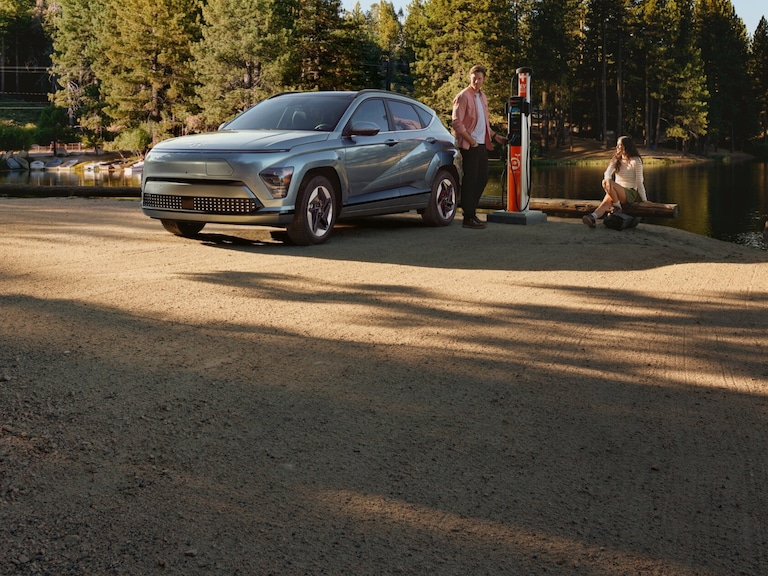
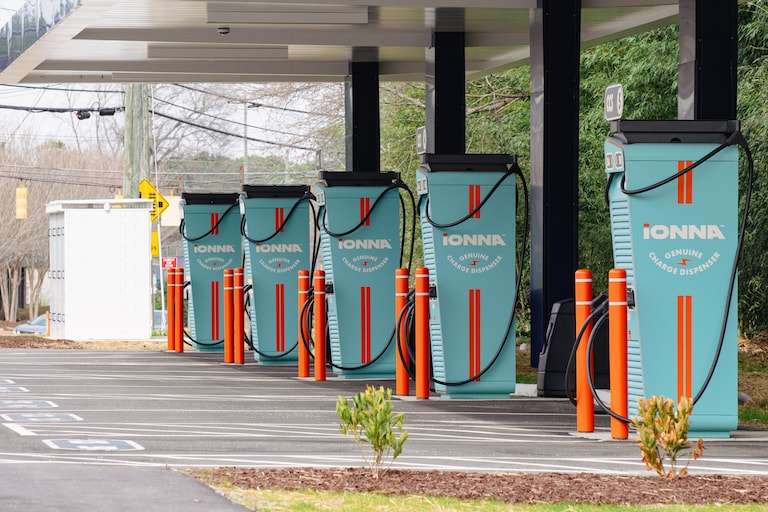
With DC fast-charging available across the country through the ChargePoint and IONNA networks, you can feel confident there's always power ahead.
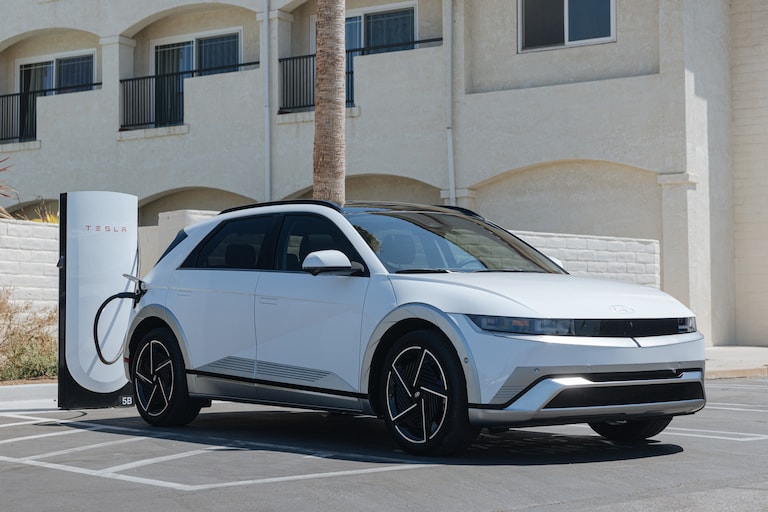
Charging your Hyundai on the road just got a whole lot easier. You get access to a bigger network, including Tesla Superchargers, an all-in-one Bluelink app that manages everything, and effortless Plug & Charge that makes payment a breeze.
During very hot weather, shaded spots or staying plugged in when parked help your vehicle's thermal management system run more efficiently.
A 100% charge is there when you need it, but the optimal range for better battery life is between 25% and 75%.
While DC fast chargers are great for road trips and saving time, for everyday charging, standard chargers are much better for your battery's long-term health.
Going on vacation? A timed charger helps keep your battery at an ideal charge level between 25-75% while you're away.
5969 Veterans Memorial Blvd
Metairie, LA 70003-1737